
Spearfishing
On this page you will find everything you need to be aware of when spearfishing to ensure that you enjoy your time in the water and return home after each outing.
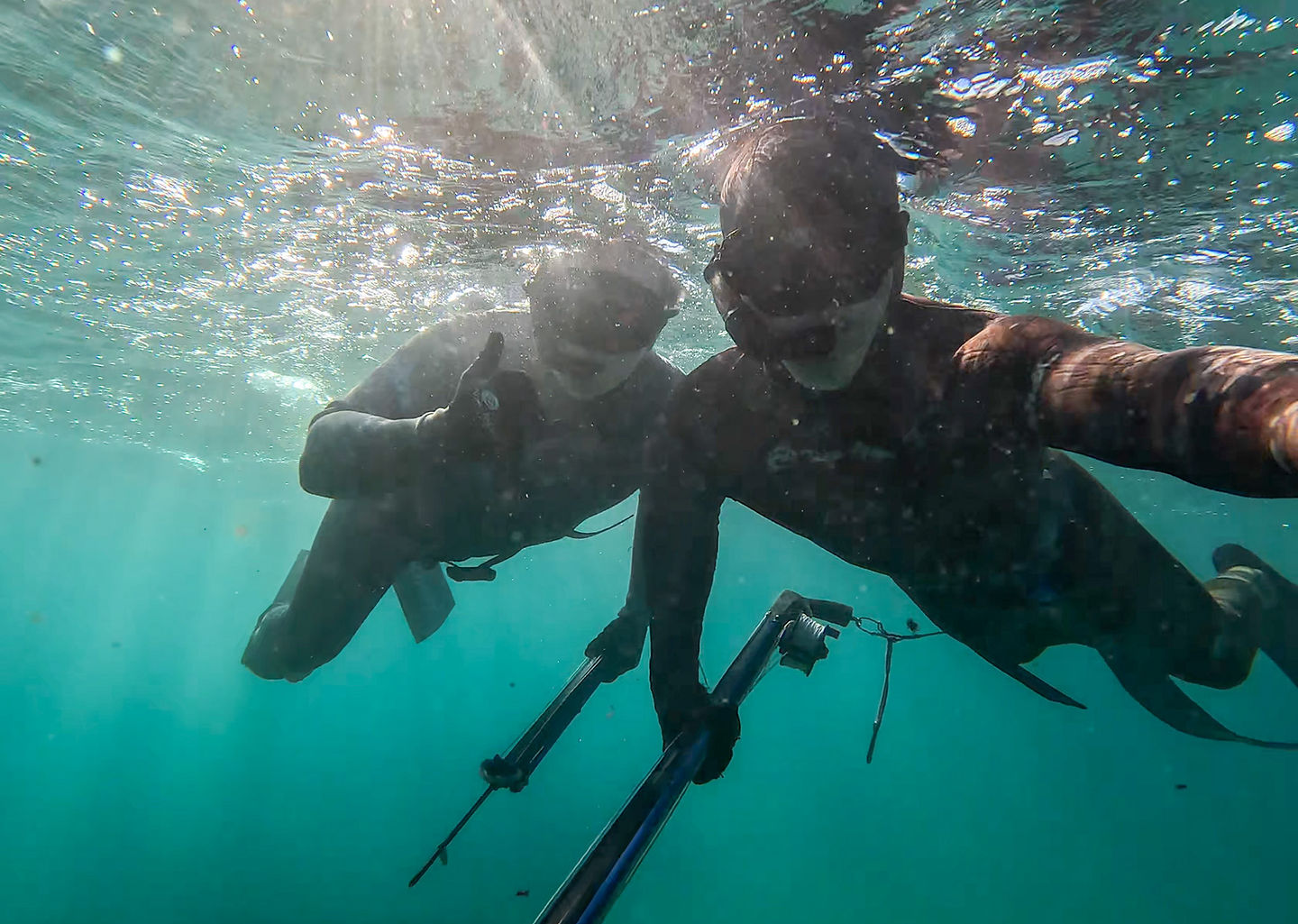
Freediving is a beautiful way to explore the ocean. Just silent, graceful, and deeply connected to nature. But without proper safety, it can quickly become dangerous. Whether you're spearfishing or simply exploring reefs, these tips will help keep you safe in the water.
This is the golden rule of spearfishing. Always dive with a buddy who is trained in freediving safety and knows how to respond to blackouts or shallow water loss of consciousness.
Don't push for personal records every time you dive. Stay well within your comfort zone and avoid hyperventilating before dives: it increases blackout risk.
Use calm, deep belly breaths before your dive and always recover properly on the surface with 3–5 recovery breaths. Never hyperventilate.
Start equalizing before you even feel pressure. Equalize gently and continuously to protect your ears and sinuses from barotrauma.
Check currents, tides, weather, and visibility before entering the water. Know the layout of the area, especially exit points and potential hazards like boats, surf, or reefs.
Always carry a dive float and flag to mark your position for boats and to rest on if needed. Attach spare gear or use it to clip your speargun or catch bag.
A certified freediving course teaches critical skills like rescue procedures, proper breathing, and how to recognize the signs of hypoxia. It could save your life, or your buddy's.
Give yourself at least double your dive time to recover on the surface. For example, if your dive was 1 minute, rest for 2 minutes before diving again.
Dehydration increases the risk of cramps and blackouts. Drink water, eat light, and avoid alcohol before diving.
If something feels off, stop. Fatigue, cold, stress, or anxiety are all signs to take a break or end your session. There will always be another day to dive.
Freediving is about patience, control, and respect: for yourself, your buddy, and the ocean. Train smart, stay humble, and always prioritize safety.